
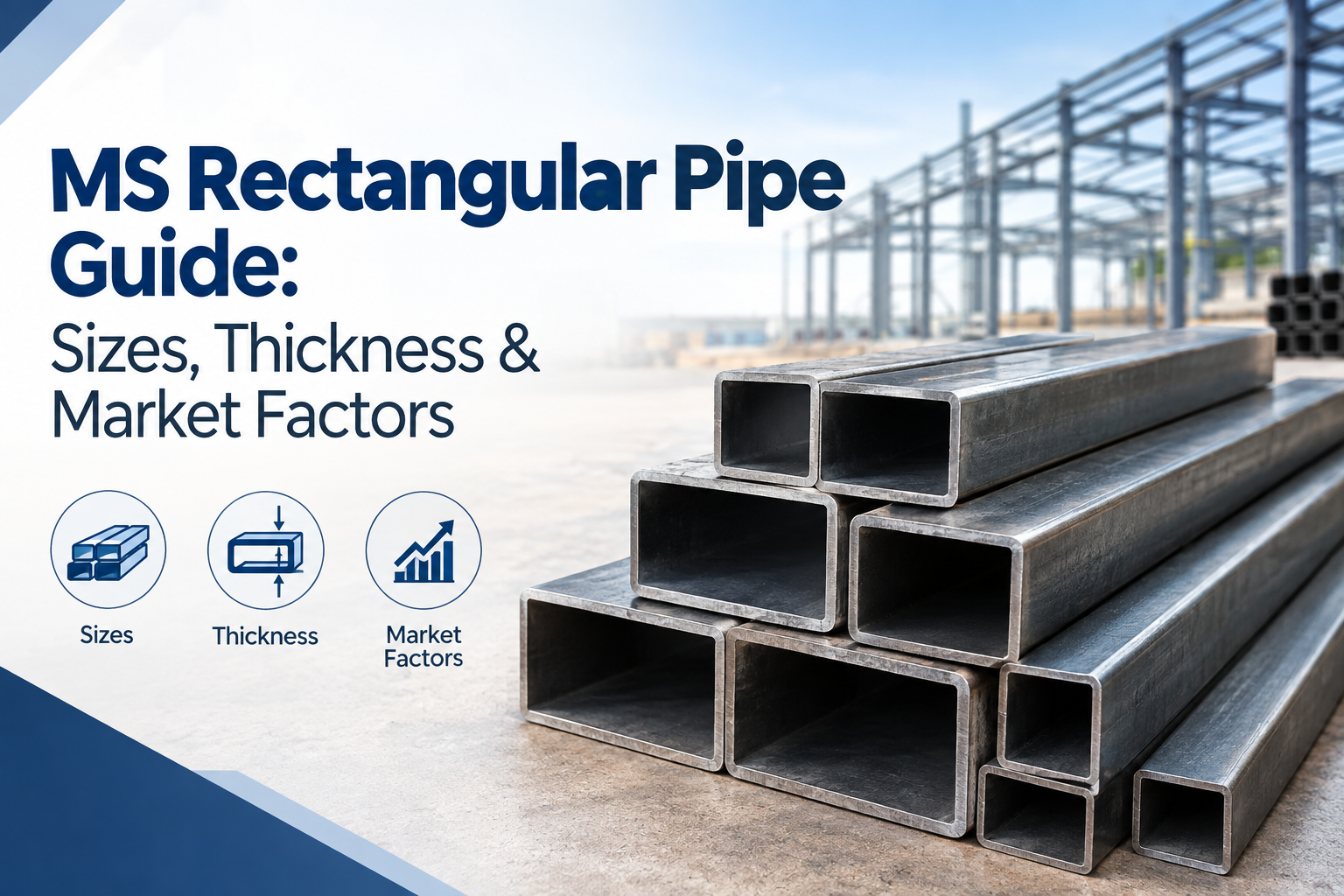
MS rectangular pipes are widely used across construction, fabrication, infrastructure, furniture, machinery, and industrial projects. We as the Best Rectangular Ms Pipes Suppliers offers excellent strength, dimensional stability, and flexibility, which makes them suitable for applications where structural performance and precise fabrication are important.
However, choosing the right MS rectangular pipe is not only about selecting a standard size. Buyers must evaluate dimensions, wall thickness, material quality, and current market conditions before making a purchase. This guide by Goyal Steel Tube will help you understand the key factors involved.
Understanding MS Rectangular Pipe Sizes
MS rectangular pipes are generally identified by their width × height × wall thickness. For example, a pipe measuring 100 mm × 50 mm × 2 mm has a rectangular cross-section with a 2 mm wall thickness.
The right size depends on the intended application. Smaller sections are commonly used for:
- Furniture and fabrication
- Gates and railings
- Lightweight structures
- Automotive applications
Larger MS rectangular pipes are preferred for:
- Industrial sheds
- Structural frameworks
- Support systems
- Machinery structures
- Construction projects
Selecting the correct dimensions is essential because the size directly affects the pipe’s load-bearing capacity and overall performance.
Why Does Thickness Matter?
The wall thickness of an MS rectangular pipe plays a major role in determining its strength and durability. Thicker pipes generally offer better resistance to bending, deformation, and external loads.
However, a thicker section also increases the overall weight and material cost. Therefore, buyers should avoid selecting thickness based only on the assumption that “thicker is always better.”
The ideal thickness should be selected according to:
- Required load capacity
- Application environment
- Welding and fabrication requirements
- Structural design specifications
- Project budget
Working with the Best Rectangular MS Pipes Suppliers can help buyers identify suitable specifications based on their actual project requirements.
Key Factors Affecting the MS Rectangular Pipe Market
The price and availability of MS rectangular pipes can change due to several market factors. Understanding these factors can help contractors and bulk buyers plan their procurement effectively.
1. Raw Material Prices
Steel is the primary raw material used for manufacturing MS pipes. Changes in steel prices directly influence the final cost of rectangular pipes.
2. Demand from Construction and Infrastructure
Growing demand from real estate, industrial construction, and infrastructure projects can increase the requirement for steel pipes and sections.
3. Manufacturing Quality
The quality of raw material, welding process, dimensional accuracy, and finishing can affect both product performance and pricing.
4. Transportation and Supply Costs
Freight charges, fuel prices, and supply-chain conditions also contribute to the overall procurement cost, especially for bulk orders.
How to Choose the Right Supplier?
When purchasing MS rectangular pipes, buyers should focus on more than just price. As the Best Rectangular Ms Pipes Suppliers, we offer consistent quality, accurate dimensions, and dependable product availability.
Before placing an order, check:
- Available size and thickness range
- Material quality and manufacturing standards
- Dimensional consistency
- Surface finish
- Bulk supply capability
- Timely delivery
Choosing an experienced supplier helps reduce the risk of inconsistent material quality and unnecessary project delays.
Best Rectangular MS Pipes Suppliers – Goyal Steel Tube
MS rectangular pipes are an important component in modern fabrication and construction. Understanding the relationship between size, thickness, and market factors can help buyers make smarter purchasing decisions. By selecting the right specifications and sourcing from the best rectangular MS pipe suppliers at Goyal Steel Tube, businesses can achieve better structural performance, cost efficiency, and long-term value.